
What is a sewage treatment plant?
A sewage treatment plant (STP) is a system designed to treat wastewater from homes or small communities so it can be safely discharged into the environment. They’re a great alternative to septic tanks for rural properties that aren’t connected to the mains sewer as they produce a much cleaner effluent.
Home » Off Mains Drainage » How Do Septic Systems Work? » What is a Sewage Treatment Plant?
How Does a Sewage Treatment Plant Work?
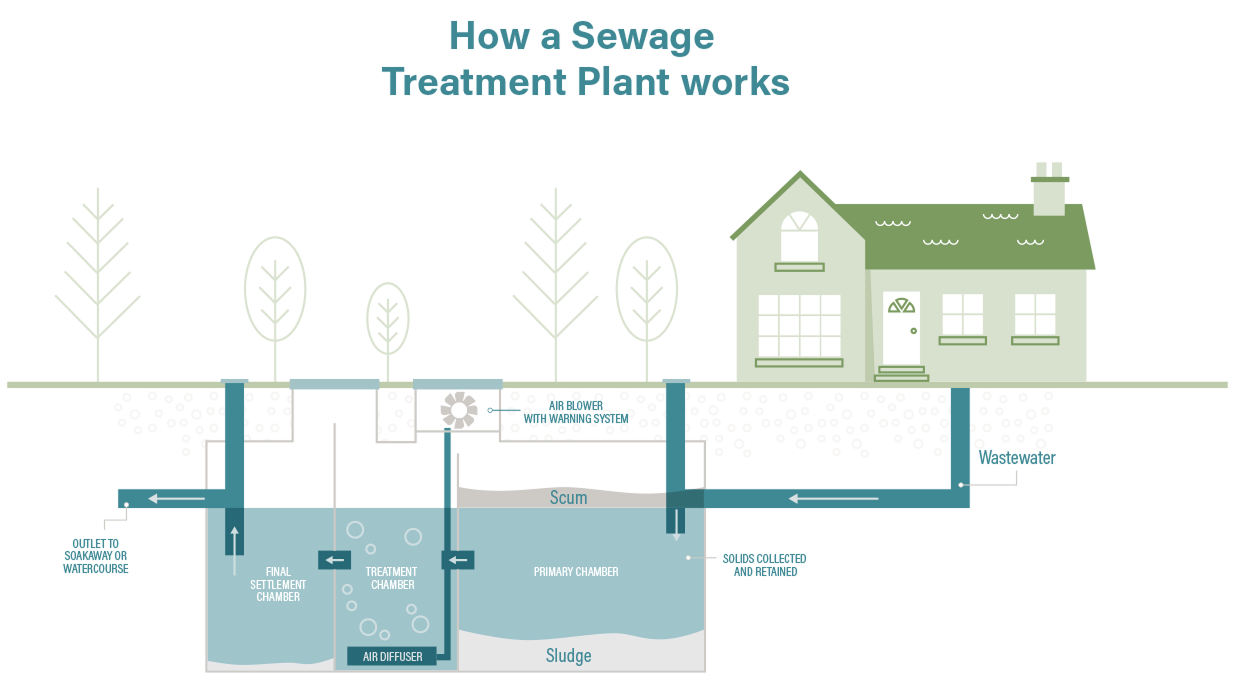
Different makes and models use different treatment methods, but most domestic sewage treatment plants combine settlement with biological treatment before the treated effluent leaves the system.
1. Primary Settlement
Wastewater from toilets, sinks, showers and appliances enters the primary settlement tank.
Here, solids sink to the bottom forming sludge, while lighter materials float to the surface. The partially clarified liquid (known as liquor) moves into the next chamber.
2. Biological Treatment (Biozone Chamber)
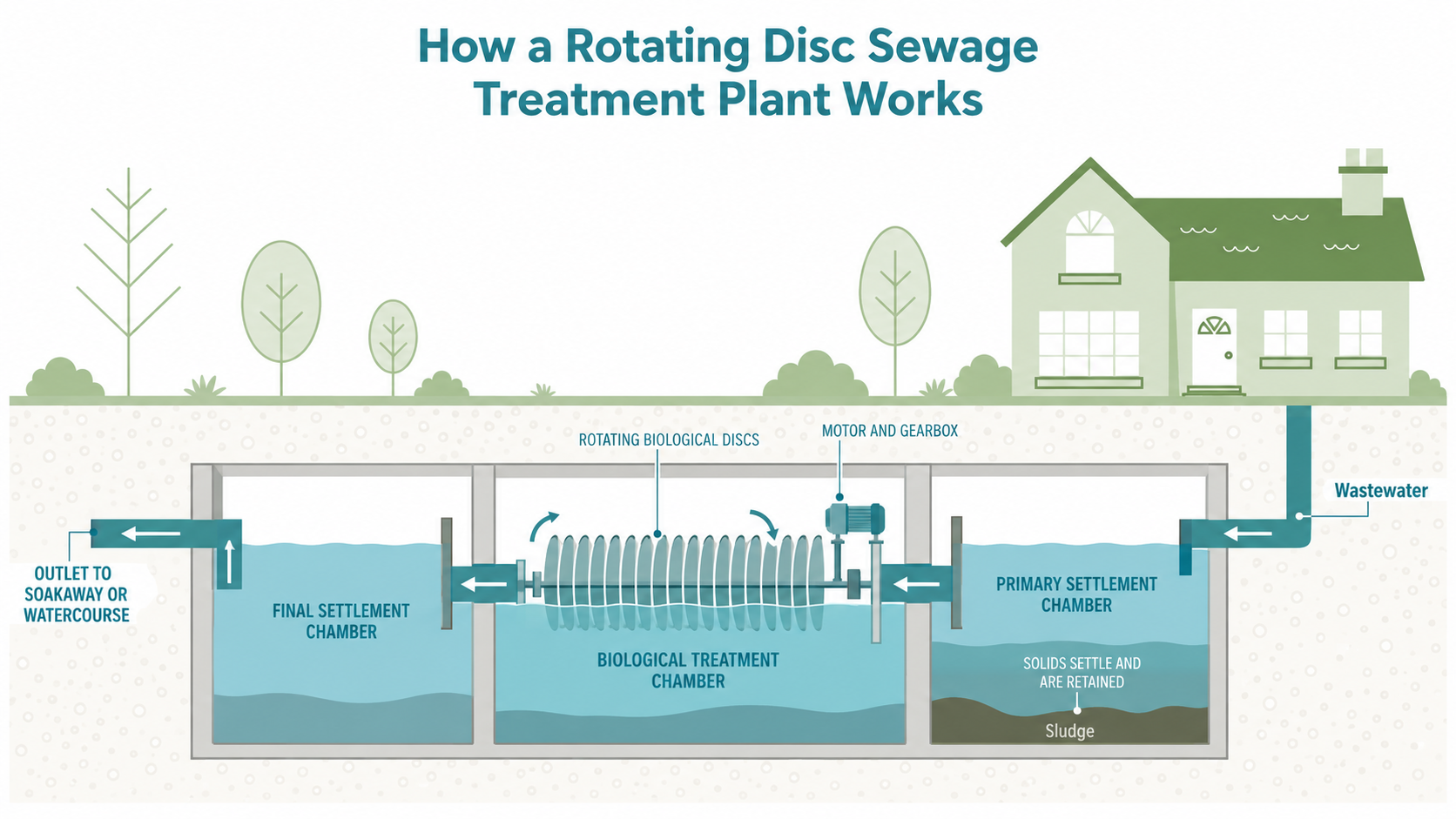
The method used to introduce oxygen and support the treatment bacteria depends on the design of the plant.
Aerated treatment plants
A blower or compressor introduces air through diffusers within the treatment chamber. This creates oxygen-rich conditions that support naturally occurring bacteria, which break down organic matter in the wastewater. Some systems also use fixed or moving media on which the treatment bacteria can grow.
Rotating-disc treatment plants
A motor slowly rotates a bank of discs that remains partly submerged in the wastewater. A biological film grows on the surface of the discs. As they rotate, the film is alternately exposed to the wastewater and the air, providing the oxygen and contact needed for bacteria to break down organic matter.
Rotating biological contactor systems include disc-based domestic plants such as the Klargester BioDisc.
3. Final Settlement (Humus Chamber)
Following biological treatment, the liquid enters a final settlement chamber, where remaining fine solids can settle out. The treated effluent then leaves through the discharge arrangement approved for the property, such as a suitable drainage field or watercourse.
The diagrams show simplified examples. The number, shape and arrangement of chambers and mechanical components vary between manufacturers and models.
CSG supports aerated, rotating-disc and other sewage treatment plants from a broad range of manufacturers.
When Is a Sewage Treatment Plant Needed?
A sewage treatment plant may be suitable when a property cannot connect to the mains sewer but requires a higher level of wastewater treatment than a septic tank can provide.
It uses settlement, aeration and biological treatment to break down sewage and produce a much cleaner effluent. Depending on the site and applicable requirements, the treated water may then be discharged to a suitable drainage field or watercourse.
A sewage treatment plant may be appropriate for:
- Rural homes that are not connected to the mains sewer
- Shared systems serving several properties
- Farms, holiday parks and small commercial premises
- Sites where a higher standard of treated effluent is required
- Properties replacing a non-compliant septic tank discharge
- Locations where a suitable and compliant discharge route is available
The plant must be correctly sized for the number of users and expected wastewater flow. The proposed discharge route should also be assessed before installation.
Why Do Sewage Treatment Plants Need Servicing?
Sewage treatment plants rely on mechanical and electrical equipment as well as naturally occurring bacteria. Depending on the plant’s design, oxygen may be introduced by a blower and diffuser or by biological discs rotating through the wastewater and air.
If a blower, diffuser, pump, disc-drive motor, gearbox, shaft, bearing, sensor or control component develops a fault, the biological process may become less effective. This can reduce treatment performance and increase the risk of odours, alarms, blockages or system failure.
Routine servicing may include:
- Inspecting pumps and electrical components
- Checking blowers and air diffusers on aerated systems
- Checking motors, drive systems, shafts, bearings and disc assemblies on rotating-disc systems
- Testing alarms and control equipment
- Checking accessible internal chambers and pipework
- Assessing sludge levels
- Checking that the biological treatment process is operating correctly
- Identifying worn or damaged components
Servicing does not replace emptying. Sewage treatment plants also accumulate sludge and require periodic de-sludging to maintain their working capacity.
The correct servicing and emptying schedule depends on the plant’s manufacturer, model, size and usage. Following the manufacturer’s recommendations helps protect the system, maintain treatment performance and reduce the likelihood of an unexpected breakdown.
CSG’s Sewage Treatment Plants Top Tips
- Use biologically friendly household cleaning products
- Have the tank de-sludged regularly, ideally every twelve months
- Don’t allow commercial chemicals, medicines or hygiene products to enter the system
- Don’t use large quantities of biological cleaning products or bleach
- Bacteria in the tank is vital to the biological process
Frequently Asked Questions
Sewage Treatment Plant vs Septic Tank - What’s the Difference?
The sewage treatment plant process is similar to the way that a septic tank works but mechanical components provide additional processes to help break down solids to produce a cleaner, more environmentally friendly effluent.
How Often Does a Sewage Treatment Plant Need Emptying and Servicing?
A domestic system will typically need emptying (also known as desludging) once a year. Commercial systems may require more frequent emptying depending on waste volume. We recommend getting your system serviced at the same time it’s emptied.
At CSG, we can service all makes and models of STPs, checking for electrical/mechanical components, aeration, bacteria levels and sludge/biomass. Regular servicing helps prevent breakdowns and helps you stay compliant with the UK’s General Binding Rules.
What Common Issues Should I Look Out For?
If you notice foul odours, sewer backups, cloudy or grey affluent, alarms sounding on the control panel, excessive noise or pumps running constantly, these are all signs that your sewage treatment plant isn’t working as it should. If you notice any of these signs, get in touch with a sewage expert, like the team at CSG.
What Are the General Binding Rules?
The General Binding Rules are mandatory environmental regulations in England for operating small sewage discharges (like septic tanks and sewage treatment plants). If you meet all of the General Binding Rules, you will not need a permit. You can find official guidance on these rules here. Requirements vary by site or system, and we can advise during a site assessment.
What Should I Do if the Alarm Sounds on My Sewage Treatment Plant?
If your alarm sounds on your sewage treatment plant, call a licensed septic professional immediately as this can signal a serious issue with the system. Once you’ve arranged for a professional to assess the plant, you can silence the alarm from the control panel.
Do I Need Permission to Discharge Treated Water?
If you do not meet the General Binding Rules in the UK, you will need permission or an environmental permit to discharge treated water.
Can a Sewage Treatment Plant Handle High Levels of Usage Temporarily?
Sewage treatment plants are designed with a buffer to handle short-term, temporary high levels of usage, but if this peak flow exceeds the system’s capacity, this can cause turbulence and potential environmental non-compliance. Following an assessment, we can advise on the maximum level of usage for your system.
Related Guides: Understanding Different Sewage Systems
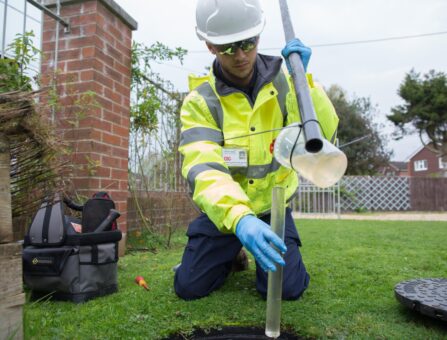

Arrange Regular Maintenance for Your Sewage Treatment Plant
Speak to our team to arrange servicing and maintenance to keep your system working as it should.
Related Off Mains Services
Prevent overflows and keep your system running smoothly with reliable nationwide emptying for septic tanks, cesspits and sewage treatment plants.
Find Out More →
Sewage Treatment Plant, Cesspit & Septic Tank Emptying


Stay on top of essential emptying with scheduled collections, helpful reminders and discounted rates through our free-to-join regular emptying scheme.
Find Out More →
Regular Septic System Emptying Scheme
Reduce breakdown risks with nationwide servicing, preventative maintenance and repairs from British Water Accredited engineers supporting all makes and models.
Find Out More →
Sewage Treatment Plant & Pump Station Servicing
Keep your treatment plant or pump station working reliably with scheduled servicing, digital reports and preferential rates through our free-to-join maintenance scheme.
Find Out More →
Regular Septic System Maintenance Scheme