
What Is a Pump Station?
A sewage pump station is a system used to move wastewater from one location to another when it cannot flow naturally using gravity.
Within an off-mains drainage system, a pump station may transfer sewage or wastewater from a property to a septic tank, sewage treatment plant, drainage system or another suitable discharge point. It can also be used to move wastewater uphill or across longer distances.
Unlike a septic tank or sewage treatment plant, a pump station does not treat wastewater. Its purpose is to collect and pump it safely to the next stage of the drainage system.
Home » Off Mains Drainage » How Do Septic Systems Work? » What is a Pump Station?
How Does an Off-Mains Pump Station Work?
Although designs vary, most sewage pump stations follow a similar process:
1. Wastewater Enters the Pump Chamber
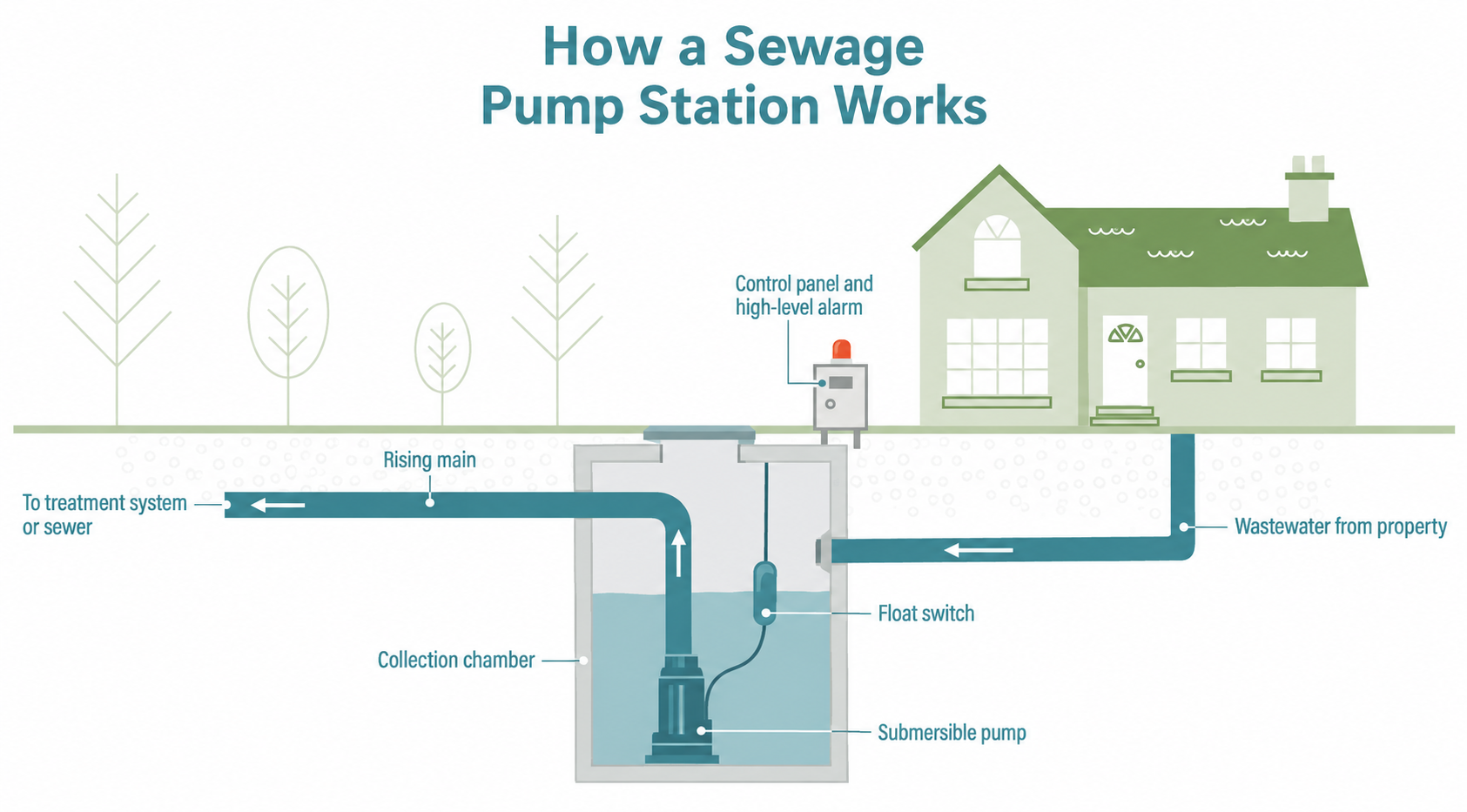
Wastewater from toilets, sinks, showers and appliances flows into an underground collection chamber.
The chamber temporarily holds the wastewater until it reaches a predetermined level.
2. The Pump Activates
A float switch or level sensor monitors the amount of wastewater inside the chamber.
When the wastewater reaches the activation level, the control system switches on the pump.
3. Wastewater Is Pumped Onwards
The pump moves the wastewater through a pressurised pipe, often called a rising main.
Depending on the design of the drainage system, the wastewater may be pumped to:
- A sewage treatment plant
- A septic tank
- A mains sewer connection
- Another part of the private drainage system
- A suitable discharge or drainage point following treatment
Once the wastewater level falls, the pump switches off and waits for the chamber to fill again.
4. The Alarm Monitors the System
Most pump stations have an alarm designed to warn you if the wastewater level becomes too high or the pump develops a fault.
An alarm should be investigated promptly. Continuing to use water while the pump is not operating could cause the chamber to overflow or sewage to back up into the property.
When Is a Pump Station Needed?
A pump station may be required when part of a property’s drainage system sits below the level of the treatment system, sewer or discharge point.
They are commonly used for:
- Rural properties with sloping or uneven ground
- Homes located below their septic tank or sewage treatment plant
- Basements, extensions and converted outbuildings
- Properties where the treatment system must be installed some distance from the building
- Shared drainage systems serving several properties
- Commercial premises, holiday parks and housing developments
- Sites where wastewater needs to be lifted to a higher drainage point
The correct pump station size and design will depend on the number of users, expected wastewater volume, pumping distance and height through which the waste must be lifted.
Why Do Pump Stations Need Regular Servicing?
Pump stations contain electrical and mechanical components that operate in a demanding environment. Grease, wipes, sanitary products, silt and other unsuitable materials can obstruct the pump or interfere with its level controls.
Routine servicing helps identify developing problems before they cause a breakdown, overflow or interruption to the property’s drainage.
Depending on the system, a service may include:
- Inspecting and testing the pump
- Checking float switches and level sensors
- Testing the control panel and alarm
- Inspecting electrical and mechanical components
- Checking valves and visible pipework
- Removing accumulated debris where required
- Checking for signs of wear, damage or water ingress
- Confirming that the system activates and switches off correctly
The appropriate service frequency depends on the pump station design, usage and manufacturer’s recommendations. Commercial, shared or heavily used systems may require more frequent attention than a small domestic installation.
CSG’s Pump Station Top Tips
- Arrange servicing in line with the manufacturer’s recommendations
- Never flush wipes, sanitary products, nappies or other unsuitable items
- Keep fats, oils and grease out of the drainage system
- Keep access covers clear and accessible
- Do not ignore an alarm, unusual noise or persistent odour
- Reduce water use if the alarm activates or the pump stops working
- Never enter the chamber or attempt electrical repairs yourself
- Keep details of your pump make, model and previous servicing where possible
Frequently Asked Questions
What Is the Difference Between a Pump Station and a Sewage Treatment Plant?
A pump station moves wastewater from one location to another. It does not treat the sewage.
A sewage treatment plant uses settlement and biological treatment processes to break down waste and produce treated effluent. A property may use both systems where wastewater needs to be pumped to the treatment plant or the treated effluent needs to be moved to a suitable discharge point.
What Is the Difference Between a Pump Station and a Septic Tank?
A septic tank separates solid waste from liquid effluent and provides partial treatment before the liquid passes to a suitable drainage field.
A pump station simply collects and transfers wastewater. It may be installed before or after a septic tank, depending on the layout and levels of the drainage system.
How Often Should a Sewage Pump Station Be Serviced?
The correct service interval depends on the pump-station design, manufacturer’s guidance and level of use.
Some domestic systems may require annual servicing, while shared, commercial or more heavily used systems may need more frequent inspections. If you do not know the make or model of your pump station, a specialist can assess the system and recommend an appropriate schedule.
What Are the Signs of a Pump Station Problem?
Common warning signs include:
- The high-level alarm sounding or flashing
- Toilets or drains emptying slowly
- Sewage backing up into the property
- Strong or persistent odours
- Unusual noises from the pump
- The pump running continuously
- The pump not operating at all
- Wet ground or wastewater around the chamber
If you notice any of these signs, reduce water use and arrange an inspection as soon as possible.
What Should I Do if the Pump Station Alarm Sounds?
Reduce the amount of water being used in the property and check whether the control panel shows a fault.
Do not enter the chamber or attempt to repair electrical components yourself. Contact a pump-station engineer, particularly if the wastewater level is continuing to rise or there is a risk of an overflow.
What Happens to a Pump Station During a Power Cut?
Most electrically powered pump stations will stop operating during a power cut. The chamber may provide some temporary storage, but its capacity is limited.
Avoid using toilets, showers, washing machines and other appliances unnecessarily until power is restored. Properties that are particularly dependent on continuous pumping may need a suitable backup arrangement.
Does a Pump Station Need Emptying?
A pump station is not normally emptied on the same routine schedule as a cesspit because wastewater is pumped onwards rather than permanently stored.
However, silt, grease and debris can accumulate inside the chamber. It may therefore require cleaning or waste removal as part of maintenance or repair work. Any connected septic tank, treatment plant or cesspit will have its own emptying requirements.
Can CSG Service and Repair My Pump Station?
Yes. CSG provides planned servicing, preventative maintenance and repairs for domestic and commercial pump stations.
Our engineers can inspect the electrical and mechanical components, test the pump and alarm system and help identify faults before they lead to a breakdown or overflow. Get in touch to see how CSG can help.
Related Guides: Understanding Different Sewage Systems

Arrange Regular Maintenance for Your Pump Station
Speak to our team to arrange servicing and maintenance to keep your system working as it should.
Related Off Mains Services
Prevent overflows and keep your system running smoothly with reliable nationwide emptying for septic tanks, cesspits and sewage treatment plants.
Find Out More →
Sewage Treatment Plant, Cesspit & Septic Tank Emptying


Stay on top of essential emptying with scheduled collections, helpful reminders and discounted rates through our free-to-join regular emptying scheme.
Find Out More →
Regular Septic System Emptying Scheme
Reduce breakdown risks with nationwide servicing, preventative maintenance and repairs from British Water Accredited engineers supporting all makes and models.
Find Out More →
Sewage Treatment Plant & Pump Station Servicing
Keep your treatment plant or pump station working reliably with scheduled servicing, digital reports and preferential rates through our free-to-join maintenance scheme.
Find Out More →
Regular Septic System Maintenance Scheme